Tag: classic movies

  • From Stuntman to Santa Claus: The Crazy, True Story of Bill Strother

    Bill Strother

    Harold Lloyd’s 1924 film “Safety Last” is known as the film where he climbs the side of a building, narrowly escaping death. Much of this was achieved with special effects, but the footage of the actual climb was real. It was all thanks to a chance encounter between Lloyd and professional building climber Bill Strother.


    On September 17th, 1922, Strother was hired to climb the Brockman Building in downtown Los Angeles. In the crowd that fateful day, was Lloyd.

    In an interview for a talk show in 1962, Lloyd related the incident:

    “Now, I was walking up 7th Street… where the. Brockman building is.

    And there was a tremendous crowd… maybe two or 300 people or more. And I inquired all I was going on.

    They said, “a man’s going to scale this building.”

    And I said, “Really?”
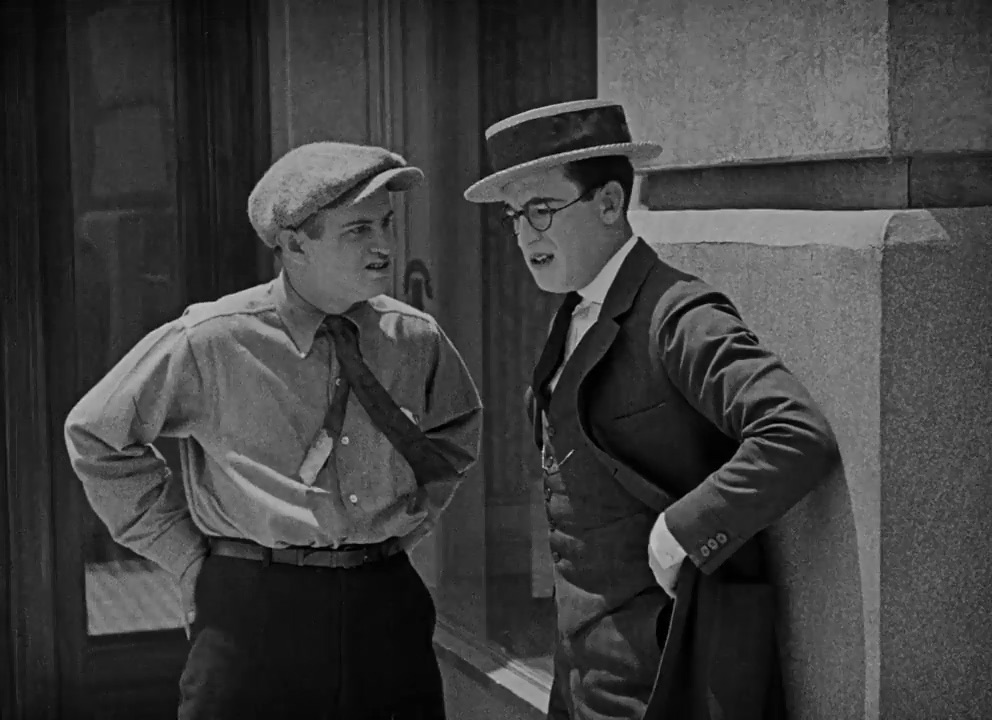
    Bill Strother (left) and Harold Lloyd (right) in a still from Safety Last, 1924.

    So I stood around, and they introduced him, and he started climbing, and he got about three floors, and I couldn’t stand it anymore.

    I knew it, and just knew he was going to be killed.

    So I walked on up the street, and I didn’t want to leave.

    I anything happened, I was going to be there to see what it was all about.

    And so I went around the corner where I couldn’t see him, and lots of people were up there too, and I said, “Where is he now?”

    “About the fifth floor.”

    “Really?”

    And then I’d peek around… he’s climbing from window to window.

    And so I peeked around and waited until he finally got to the top.

    Then he got a bicycle, rode it on the edge of the building, finished that, (there was a) flagpole right on the edge around the corner, and he crawled up the flagpole. It was a short one. Stood on top of his head, and, of course, the crowd were absolutely thrilled, and it had such a reaction on this group of people and on myself that I said, 

    ‘well, now, if it can have that and you do it properly on the screen, it should have the same results.’

    So I went back, went up there, on the roof, met the young man, and had him come out to the studio and see Hal Roach and myself, and so we hired him.


    Storyteller and Promoter

    Image: Bill Strother from an article in an Arkansas paper about a planned climb.

    Bill Strother started out as a 19-year-old promotions man for a real estate auction house in North Carolina.

    Buildering, or free-climbing buildings had become a popular stunt, with human flies and human spiders popping up in the news for scaling tall buildings without any safety nets or tethers.

    Strother was an athletic guy with a lot of energy, ambition, the impetuousness of youth. What better way to get some publicity than a crazy stunt?

    In an article for the Saturday Evening Post from 1951, he related this version of his origin story:

    In 1915, the fliers for his upcoming auction were on a train that was running late. Strother sat at the local lunch counter that day, wondering what he was going to do. He turned to the man sitting next to him and mused that he might have to climb the county courthouse to get some attention. That man happened to be the editor of the local newspaper.

    The next day, he opened the paper to discover an announcement: “Bill Strother Will Climb the County Couthouse Today At 2 PM”.

    In front of a crowd of five thousand, he safely climbed the side of the building in his regular street clothes, using only his bare hands. The stunt paid off… the next day he netted $35,000 at the auction, the equivalent of over 800 thousand dollars today.

    Researching this article, I could not find any evidence of this climb in the local paper that year, but I did find many articles thereafter, such as this one below.

    Article from the Winnipeg Evening Tribune, October 14, 1922. “Human Spider in Action”

    From Human Spider to Santa Claus

    From then on, Strother became a professional Human Spider. He climbed more buildings throughout the south, slowly moving his way West across the country. Sometimes the climbs were promotions for businesses, and other times for charities like the Red Cross.
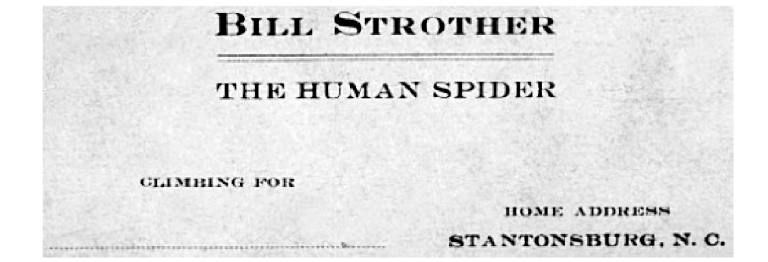
    Business Card for Bill Strother “The Human Spider”

    After signing on with Hal Roach and Harold Lloyd, Strother became performed in a handful of films, and later started an act with his dog, who was  featured in “The Gold Rush” with Charlie Chaplin. They would also perform in Santa Claus shows for department stores.

    After too many stunts and too many injuries, Strother returned to the South to retire and run “The Strother House” hotel with his wife. Retirement did not suit, him, and before long, he was entering the third chapter of his career.

    He had an idea for a Christmas-themed show about the spirit giving, and to decided to pitch it to the local department store, Miller and Rhodes, in 1942. They turned down his concept, but liked his message and enthusiasm, and offered him the job of Santa. Strother had no desire to play Santa Claus, so, as the legend goes, he asked for an extraordinary amount of money, thinking they would turn him down flat. Instead, they agreed to $1000 a week, and Bill Strother became the highest-paid Santa Claus in the world.
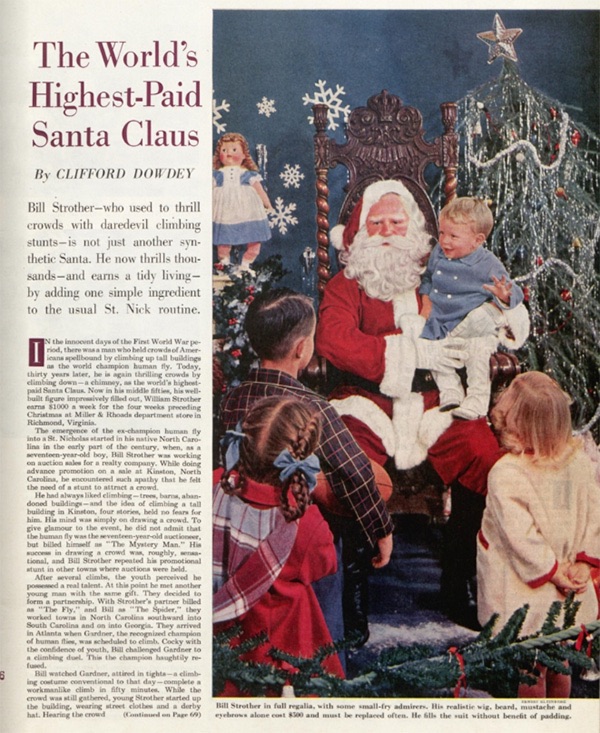
    Excerpt from the Saturday Evening Post “The World’s Highest-Paid Santa Claus” December 22, 1951

    As with his buildering career, Strother gave 100% to this new role. He traveled back to California and had Hollywood makeup artist Max Factor create a realistic look for him, which took 2 hours to prepare each day. He would emerge from a chimney each day for the children and, thanks to a helper with a concealed microphone, could call each of them by name. When not at the store, Strother’s Santa would visit sick children at home, hospitals, and appear in parades. Though he never had children of his own, he was able to touch the lives and bring magic to thousands across the country each year.

    He again moved to California, but still managed an annual trip to Virgina to play Santa each Christmas up until his untimely death in 1957 in a car accident. He was inducted into the to the Santa Claus Hall of Fame in 2010.
  • Director of Babylon on the “catastrophic “ end of silent film

    www.slashfilm.com/1092449/director-damien-chazelle-found-the-early-talkies-to-be-a-catastrophic-loss-for-cinema/

    Anyone looking forward to the movie Babylon? I’ve heard some complaining already that it’s not historically accurate, but I’m prepared to give it the benefit of the doubt.

    Here’s an interview with the director, Damien Chazelle, that’s worth a read.

    Damien Chazelle:

    Comparing some of the last silent films to some of the first sound films, you see right away just how brutal the shift was — that suddenly the open-air freedom and expansiveness and experimentation of silent film gets sandwiched and cloistered onto very confined soundstages where you can barely move because they hadn’t quite figured out yet how to move the camera easily with sound. The early talkies are really hemmed in, and it feels like this total, catastrophic loss.”

    Read More: https://www.slashfilm.com/1092449/director-damien-chazelle-found-the-early-talkies-to-be-a-catastrophic-loss-for-cinema/?utm_campaign=clip

  • NPR article on early women filmmakers

    www.npr.org/2022/08/29/1115290748/discovering-the-forgotten-women-of-silent-cinema

    Nice piece here about a lobby card exhibit, but more importantly about women filmmakers during the silent era. Anita Loos, Marion Davies, and the Talmage sisters are mentioned.

  • Interesting article about Nitrate Film

    Original Article at BFI

    Nitrate film is mostly discussed because of its flammability and the need for careful preservation. Here’s an interesting article I came across about how the BFI has been working to preserve films originally on this stock, as well as what exactly IS nitrate? If you’re interested in the technical aspects of film and film restoration, it’s worth a look.

  • A Tribute to Rudolph Valentino

    For the first video on my channel, I decided to focus on someone I had never really paid much attention to in film school: Rudolph Valentino. From just watching a few clips and hearing about how women lost their minds over his untimely passing, I figured he was just an overrated sex symbol; all sex and no substance.

    A Tribute to Rudolph Valentino on Talking Silents

    However, after watching as many of his films as I could get my hands on recently, my thoughts have changed. Rudolph Valentino was truly made for silent pictures. I hope I have captured in this video how much emotion he could portray with just a look…a look that could melt butter. He wasn’t just a pretty face, but a face that could say in a glance what might today require a whole paragraph of dialogue.

    I was very impressed with his charisma and charm. It’s hard to look at the other actors in the screen because he pulls focus every time unintentionally.

    His best known role is probably as the Sheik in the aptly titled, “The Sheik,” but he showed a lot of versatility in a variety of roles, as you’ll see here. One minute he’s wooing a lady, the next he’s shooting a gun or dancing flamenco.

    I hope this video encourages you to check out some of films, which can easily be found on the internet for free, or on my channel. Watch, like, and subscribe!

  • Why Silent Films Are Awesome (and still relevant)

    If you think silent films are boring, grainy, or just silly, I am here to change your mind.

    Silent films are fascinating. The artists who made them were learning as they went. There were no rules and plenty of room for innovation. Things we take for granted today we’re invented by these filmmakers working with rudimentary equipment and, sometimes, only natural light.

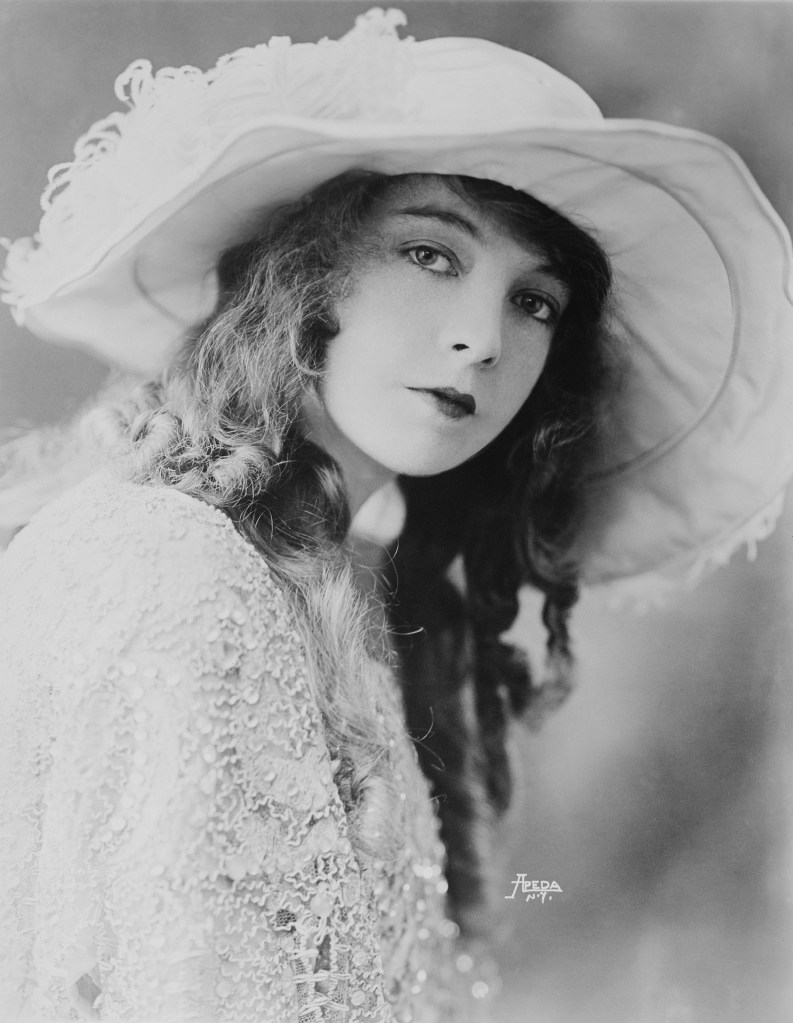
    Actress Lilian Gish via Pixabay

    Silent films are only grainy if you have a bad print. Over 90% of all silent films ever made have been lost forever, never to be seen again. Many of the prints you see today were taken from sub-par copies because that’s all we have. Luckily, many of these masterpieces are being restored when the funding is available. (Support film restoration!)

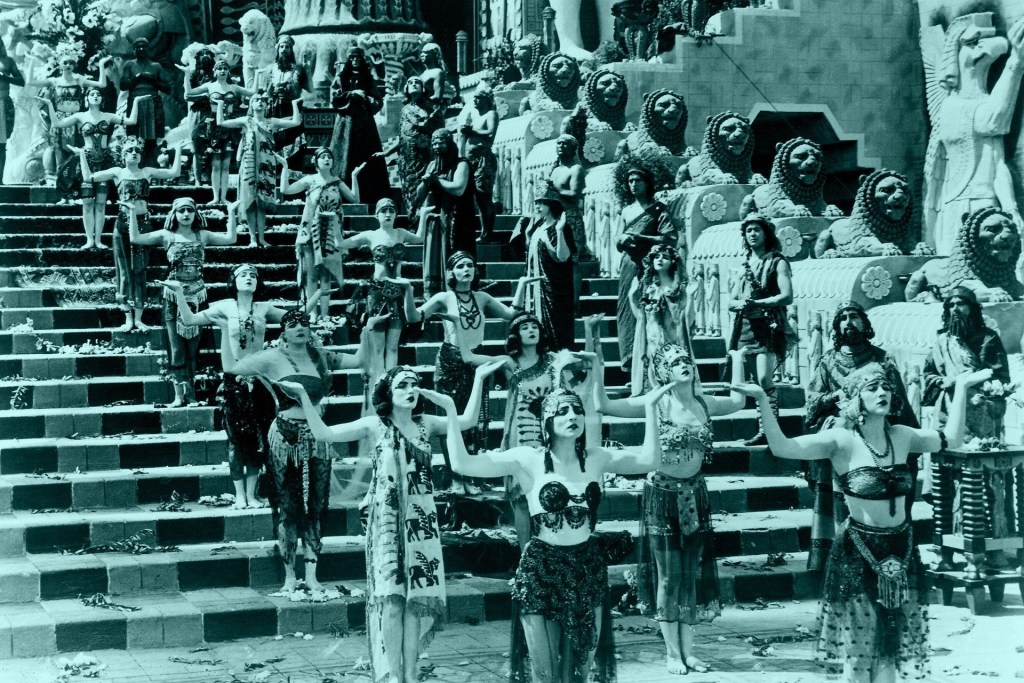
    Scene from D.W. Griffith’s Intolerance

    Sometimes silent films look unintentionally silly. This is usually because they were frequently run at the wrong speed when shown on television, giving them a “Benny Hill chasing a half-naked woman while Yakety Sax plays” effect. If you don’t know what that means, watch this. Frame rates were not universal back then, frequently around 16 FPS, but later the standard was set at 24 FPS, so many silent films were being run at a much faster rate than intended.

    This is only just scratching the surface. Pioneers of early cinema, including women, immigrants, and minorities, did so much with so little, before filmmaking became a commodity run by a few white men.

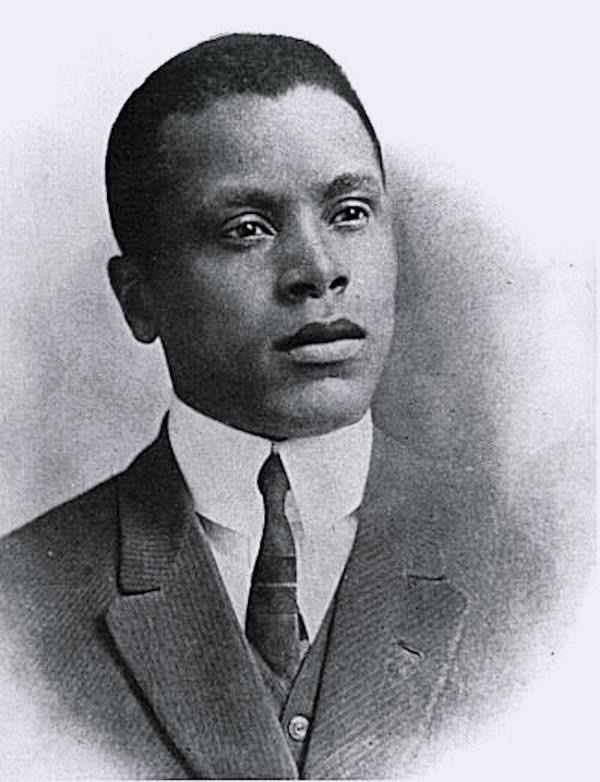
    Oscar Michaux, silent filmmaker

    This is my first post here while I work on launching my YouTube channel, where you’ll find my silent film documentaries and can watch some early films, with context and commentary. If you have any interest in filmmaking, history, or creative innovation, be sure to subscribe here and on YouTube so you don’t miss a thing!